Thursday, 27 November 2014

Mwanza

Last weekend we spent two days in Mwanza, Tanzania’s second largest city, located on the shore of Lake Victoria. It’s about two and a half hours drive north of Shinyanga with plenty to look at on the way. Being the main city on this side of the country, it has a fairly major airport and a decent road between the two has made Shinyanaga much more accessible in recent years.

The trip was a bit of a holiday and also a chance to visit Tearfund Tanzania’s main office. Tearfund moved from Dar to Mwanza over the summer and now share a compound with AICT’s country headquarters and a few other organisations. Much of Tearfund’s involvement in Tanzania is focused on areas within the ‘Lake Zone’ (regions near Lake Victoria) which includes Mwanza and Shinyanga so the relocation allows them to be closer to more of their projects.

Mwanza has a wide range of shops, restaurants and things to see. There are also more Mzungus wandering the streets so we’re not quite the novelty we are in Shinyanga! We got to see some huge snakes at disconcertingly close quarters – click here for photographic proof. Rumours of a pizzeria didn’t quite materialise but we did manage to find a chicken curry. On Friday night we went to see some live African music; a heady, enjoyable mix of Congolese and Tanzanian beats which will be high on the agenda for any potential visitors.

The area is famous for its striking rocky outcrops so on the way home we stopped by Mwanza’s best known landmark – Bismarck Rock. Not quite sure how it stays like that, particularly with the storms that hit pretty regularly. Must be stuck on or picked up and replaced an awful lot... 


Monday, 24 November 2014

Comfort FM

...unique new york...the human torch was denied a bank loan...

Given 2 hours notice for our first appearance on Tanzanian radio, our Ron Burgundy inspired vocal warm up routine was in full flow as we made our way to Faraja FM studios in Shinyanga. Short notice is the order for the day here, even for a looming live radio broadcast!

The school we are working with are expanding and looking to enrol enough students to increase numbers by 50% before the start of the new academic year in January. AICT had secured some time on an evening talk show so we were brought along to add some English language glamour.

The studio was small with foam lined walls for sound proofing giving it the ambience of a padded cell. There were 7 of us in a studio designed for less which made sharing the one available mic and headphone set a tricky operation. Any noise was met with some furious hand waving from the presenter who, ever the professional, didn’t break stride as he organised his 7 guests, fielded incoming calls and texts, monitored a temperamental A/C unit and timed his jingles to perfection.

The majority of the time was spent giving an overview of the school in Swahili from the Principal and other AICT staff. During a prolonged silence, everyone turned and looked at Alice and she was beckoned to the microphone – clearly the previous Swahili has been her introduction. Feverish whispering of ‘express yourself’ and a room full of ‘thumbs up’ accompanied the commencement of Alice’s fledgling radio career.

We both spoke briefly and were very relieved when we had finished. Part of the show was for callers to comment or ask questions. One was very happy to hear English speakers on the radio – always good to get positive feedback from the masses! You can see more photos here.

It was all felt a bit surreal, especially with so little notice. Apparently the programme will be repeated during the week so any regular listeners to Faraja FM out there may still be able to catch our dulcet tones. We also appear briefly in a TV ad for the school – coming soon.

Swahilli word of the day: faraja (comfort) 

Thursday, 13 November 2014

Our House is on the Internet

http://www.bing.com/maps/?v=2&cp=-3.653247~33.416989&lvl=20&sty=h&q=Shinyanga,%20Shinyanga,%20Tanzania&form=LMLTCCNot sure how we haven't noticed this before but we've found our house on Bing Maps aerial imagery. The internet really is amazing. If you look closely enough you can see our substantial looking perimeter walls of which we now only have three.

We've also put up some general information about education and water access in Shinyanga, links can be found along the top of the blog.

Paul has had some productive conversations relating to water at the school this week. The school has a mains water supply but it is unreliable and expensive. They are starting to limit the availability of water to students as costs increasingly become an issue. They do have plenty of roof area, and will get an abundance of rain over the next few months so we're are looking at setting up a rainwater harvesting system to provide the school with an reliable, free source of water. Again, the internet is coming in very useful and significant research is currently being undertaken!

We are starting to feel part of the community and have had visits from neighbours, other teachers and people from the church. We have a fridge so cold 'sodas' seem to be a big draw. We are really enjoying getting to know people and, over countless colas, feel we are beginning to get a better understanding the Tanzanian culture and mindset. 

One of the favourite conversation topics is the weather in Ireland. Facts like 'it rains most of the time but we hardly ever have thunderstorms', 'yes, we do know what temperatures less than 0 degrees feel like' and 'no, we're not used to seeing the sun for more than two days in a row' are regularly met with incredulity! A particular highlight was 'ice - that's like sand but cold, isn't it?'...yes, I suppose that's one possible description.

History in school has a heavy focus on colonisation and the effect it has had on Tanzania. A history teacher told us that the students do not like white people as a result, although thankfully we seem to be exempt from such wrath. Pointing out that Ireland was also colonised by the British did get a few laughs. Although trying to explain that the UK kept a bit of Ireland has proven slightly harder!

Another of the teachers told us that old style colonisation may have ended but that it hasn't stopped western countries exploiting their former colonies. Citing examples of foreign run gold mines, mass exportation of Tanzania's natural resources and meagre cash crop prices, he said that the West has simply changed the title to 'globalisation' and continues to offer local people a vastly unfair deal. Certainly an interesting and thought provoking point...

Monday, 3 November 2014

Mr and Mrs Paul 2

On Saturday we had the privilege of attending a local wedding of a couple called Paul and Ruth. In some ways, weddings here are similar to home – big dress, church service, reception meal and partying into the small hours. Of course there are also a lot of local customs that made the day particularly interesting for a couple of foreign visitors. The wedding we attended was hosted by the bride’s brother-in-law and not her immediate family. This reflects the ‘one for all’ Tanzanian attitude to family and the sharing and generosity it involves.

The church service lasted a fairly standard 3 hours with plenty of singing and dancing, although thankfully with minimal audience participation. It also became apparent that there’s no such thing as ‘walking’ at any point during the day, no matter what the distance, dancing was the only acceptable method of movement. Towards the end of the service, the congregation were invited to come forward and congratulate the newly married couple so unlike in Ireland where an orderly queue would be formed, we found ourselves part of a raucous conga line!

After the service, we went for lunch which was accompanied by yet more choir singing and dancing, just to make sure any silence was avoided. The food was delicious and included beef, our first taste of red meat in Tanzania. Apparently we almost missed out on our meaty treat though. The bride’s brother-in-law told us that he was sent to walk a mile to collect the beef earlier in the day, and obviously beef is easier to transport when it is still alive to walk the journey itself. Dinner had other ideas and decided to make a break for freedom. This resulted in a very hot and tired brother-in-law missing most of the service. The morning exercise only seemed to tenderise the meat and lunch was enjoyed by all.

On the way home for a break and ‘resty’ between celebrations, a passing comment revealed that we were expected to match the bridal party’s chosen colour theme of blue and yellow for the evening reception. Apparently the more ‘bridesmaid’ you look the better, clearly dress clashing isn’t the social faux pas it is at home. A swift change of shirt, altering of a dress and dismantlement of a yellow cushion cover, we were all set.

After attending a wedding here, some things we wish we knew when we got married:
  • It’s perfectly acceptable to say how much cash your gift should be. And even print it on the invitation. And refuse entry if it’s not paid.
  • Walking is never an option. Always dance!
  • Gifts should be proudly displayed and presented. The more people carrying it the better. 
  • Food should be as fresh as possible...kill your cow that morning.
  • Once married, the bride should always carry the man’s jacket and prepare his own special food plate. Obviously marriage renders all men helpless.
  • The only way to travel around town is with the accompaniment of a brass band on the back of a flat bed truck.
  • Main course should include beef four ways and chicken three ways. And a boiled banana.
We’ve set up a flickr account with some photos of the day. They can be accessed here.

Swahilli word of the day: pongezi (congratulations – used extensively throughout the day)

Wednesday, 29 October 2014

Our wall fell over...


Shinyanga was hit by a huge storm on Saturday night, thunder and lightning like nothing we'd ever experienced, although we've since been told that it wasn't anything special and that there's a lot worse to come!

Woke up on Sunday morning to a unexpected sight from our kitchen window - the house next door. Turns out the particularly loud thunder we heard at one point was the wall between us and our neighbours being blown over. Thankfully no one was hurt but it did hit the wall of the other house and cause some damage. See before and after photos below.

The owner of the house has been great and there's now a construction team working on the re-build. Apparently they couldn't get hold of any pre-made breeze blocks so are making hundreds by hand, one at a time. We also have no water at the moment so they have to walk and get water to mix the concrete. Really is a slow and painful process in some serious heat. Think a lack of foundations may have contributed to the original collapse so will be interesting to see if that's rectified this time.

It did give us a good opportunity to meet our neighbours who are very friendly and may even supply us with a few eggs, every Tanzanian cloud...


Monday, 27 October 2014

Tanzanian Premier League


Saturday, 4pm (advertised at 2pm but 2 hours isn’t even close to being ‘late’), optimistic crowds and the unmistakable howl of vuvuzelas can only mean one thing – it’s Tanzania Vodacom Premier League time. Young Africans from Dar, one of the best teams in the country, were in town to play local team Stand United. 

Stand United really are one of the success stories of modern football. Delightfully named after the bus stands where the idea for forming a team was originally hatched, the team is comprised of local talent who have never forgotten their roots. Loyal to their club, playing with pride in their shirts and with an annual budget comparable to the cost of one of Wayne Rooney’s hair plugs, they really are the local boys done good, now plying their trade in the upper echelons of Tanzanian football.

Unfortunately the fairytale was not destined to continue on Saturday as Stand United were outplayed by a superior Young Africans team featuring not one but two star/aging Brazilians. The near capacity crowd of 10,000 (unofficial estimates nearer 20,000) at Kambarage Stadium in Shinyanga was rocked by an early Yanga goal from which Stand never really recovered. The young, skilful Stand-onians had no reply to a team consisting of six members of the national team and as tired legs and minds kicked in, the visitors helped themselves to two late goals to finish with an emphatic victory.

Football clichés aside, it was a remarkable experience and a great match to watch. We had ‘VIP’ tickets which granted us permission to drive into the stadium and park along the sidelines. Unfortunately we were too late to take in a car but we were able to stand beside the subs bench for the first half, felt more like a member of the team’s back-room staff than a casual observer! 

Tanzanians really are passionate about their football so the atmosphere was incredible – no idea how people dance, sing and blow vuvuzelas for 90 minutes at temperatures well over 30 degrees.  However, passions spilled over into some bad tempered bottle throwing at half time so we had to make a quick escape from where the players had gathered until police intervention had calmed things down.

During the second half, Young Africans decided to abandon their designated subs bench so, not having a seat ourselves, we were invited to take advantage and enjoyed the best view in the house (click here for photos). We were very aware of how conspicuous we were, the only white people in the stadium sitting on the players’ seats, but all part of our ‘Mzungu’ experience.

Stand United til I die...not sure if season tickets exist though, or a fantasy league...


Swahilli word of the day: Ligi kuu Bara
means National Premier League - Google it for further news, views and updates

Tuesday, 21 October 2014

Mr. and Mrs. Paul

Our current routine consists of Monday to Wednesday in school and Thursday / Friday spent initially observing community based projects with the aim of becoming more involved in those as the months progress – we have a lot to learn and get used to before we get really stuck in! The school is a good place to get used to how things work, meet local people and help us feel like we’re instantly involved.

As we are now called in school, Mrs. Paul is teaching English and Mr. Paul has got roped into helping with a few Physics classes so our evenings are spent refreshing distant Junior Cert Physics knowledge and trying to work out what using the present continuous tense to convey repetitive irritation means (answers on a postcard to Mr. and Mrs. Paul, Shinyanga please). Thankfully, secondary school education In Tanzania is all done through English so our lack of Swahili does have some uses. It seems to be going well so far, we think...

Alice is having a lot of fun with the standard English comprehension texts in her class which have included gems such as “The woman’s husband has died. When is the funeral?”, “Why was he buried that day?” and question and answer sessions with responses like “I like to pray, I do not like to death”. Needless to say, Alice is going to try and inject some less morbid themes into her classes. 

Water and electricity supply are interrupted relatively often here (as we type this we’re in the middle of a power cut) but you adjust to that pretty quickly, cooking meals and charging phones when you have it and reading by torch light when you don’t. We are also very fortunate that the house has a water storage tank so we always have a steady supply.

However, the school is badly affected by water outages, particularly as they need quite a bit to feed and wash 200 boarding students. Last week, the school’s supply was stopped because a heavy truck drove over a mains pipe – an avoidable error in its own right. Within a short space of time, their storage tanks were drained so the students had to take it in turns to walk with buckets to a pump half a mile away which majorly disrupts classes. Although, as with most things that pose a problem here, the collection of water was done with a cheerful attitude that sees such adversity as a challenging part of life to be overcome, not wallowed in.

The lack of water is also a major issue in terms of hygiene and health and is something that the school is looking to rectify. During a meeting we were told that now there’s a Water Engineer here, we won’t have any more problems so looks like Paul will be involved in that – no pressure!  We are beginning to adjust to the pace and approach to life here but as we do we increasingly realise that it will take time to overcome our limitations.

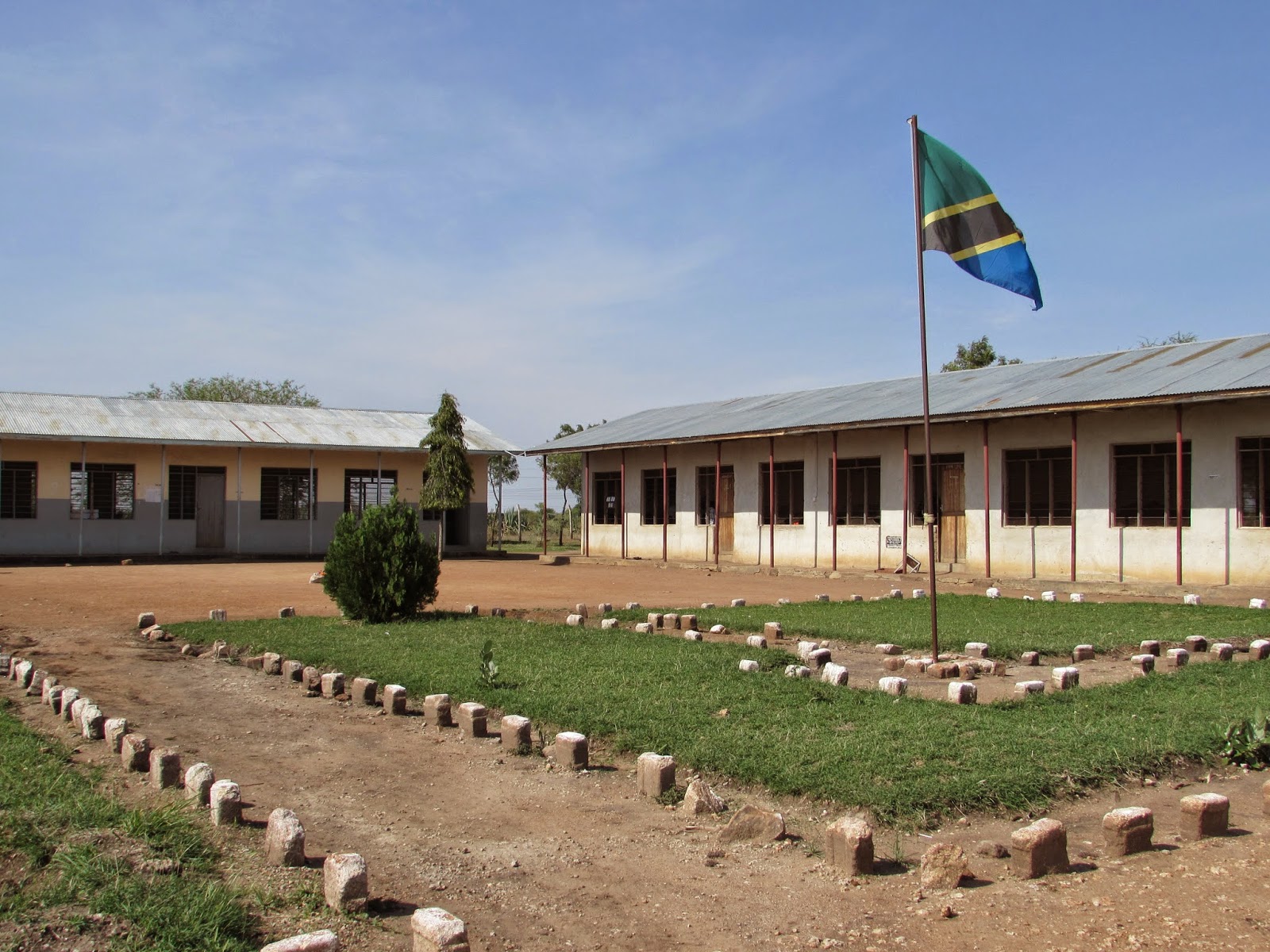
To see some pictures of our school, click here