Monday, 3 November 2014

Mr and Mrs Paul 2

On Saturday we had the privilege of attending a local wedding of a couple called Paul and Ruth. In some ways, weddings here are similar to home – big dress, church service, reception meal and partying into the small hours. Of course there are also a lot of local customs that made the day particularly interesting for a couple of foreign visitors. The wedding we attended was hosted by the bride’s brother-in-law and not her immediate family. This reflects the ‘one for all’ Tanzanian attitude to family and the sharing and generosity it involves.

The church service lasted a fairly standard 3 hours with plenty of singing and dancing, although thankfully with minimal audience participation. It also became apparent that there’s no such thing as ‘walking’ at any point during the day, no matter what the distance, dancing was the only acceptable method of movement. Towards the end of the service, the congregation were invited to come forward and congratulate the newly married couple so unlike in Ireland where an orderly queue would be formed, we found ourselves part of a raucous conga line!

After the service, we went for lunch which was accompanied by yet more choir singing and dancing, just to make sure any silence was avoided. The food was delicious and included beef, our first taste of red meat in Tanzania. Apparently we almost missed out on our meaty treat though. The bride’s brother-in-law told us that he was sent to walk a mile to collect the beef earlier in the day, and obviously beef is easier to transport when it is still alive to walk the journey itself. Dinner had other ideas and decided to make a break for freedom. This resulted in a very hot and tired brother-in-law missing most of the service. The morning exercise only seemed to tenderise the meat and lunch was enjoyed by all.

On the way home for a break and ‘resty’ between celebrations, a passing comment revealed that we were expected to match the bridal party’s chosen colour theme of blue and yellow for the evening reception. Apparently the more ‘bridesmaid’ you look the better, clearly dress clashing isn’t the social faux pas it is at home. A swift change of shirt, altering of a dress and dismantlement of a yellow cushion cover, we were all set.

After attending a wedding here, some things we wish we knew when we got married:
  • It’s perfectly acceptable to say how much cash your gift should be. And even print it on the invitation. And refuse entry if it’s not paid.
  • Walking is never an option. Always dance!
  • Gifts should be proudly displayed and presented. The more people carrying it the better. 
  • Food should be as fresh as possible...kill your cow that morning.
  • Once married, the bride should always carry the man’s jacket and prepare his own special food plate. Obviously marriage renders all men helpless.
  • The only way to travel around town is with the accompaniment of a brass band on the back of a flat bed truck.
  • Main course should include beef four ways and chicken three ways. And a boiled banana.
We’ve set up a flickr account with some photos of the day. They can be accessed here.

Swahilli word of the day: pongezi (congratulations – used extensively throughout the day)

Wednesday, 29 October 2014

Our wall fell over...


Shinyanga was hit by a huge storm on Saturday night, thunder and lightning like nothing we'd ever experienced, although we've since been told that it wasn't anything special and that there's a lot worse to come!

Woke up on Sunday morning to a unexpected sight from our kitchen window - the house next door. Turns out the particularly loud thunder we heard at one point was the wall between us and our neighbours being blown over. Thankfully no one was hurt but it did hit the wall of the other house and cause some damage. See before and after photos below.

The owner of the house has been great and there's now a construction team working on the re-build. Apparently they couldn't get hold of any pre-made breeze blocks so are making hundreds by hand, one at a time. We also have no water at the moment so they have to walk and get water to mix the concrete. Really is a slow and painful process in some serious heat. Think a lack of foundations may have contributed to the original collapse so will be interesting to see if that's rectified this time.

It did give us a good opportunity to meet our neighbours who are very friendly and may even supply us with a few eggs, every Tanzanian cloud...


Monday, 27 October 2014

Tanzanian Premier League


Saturday, 4pm (advertised at 2pm but 2 hours isn’t even close to being ‘late’), optimistic crowds and the unmistakable howl of vuvuzelas can only mean one thing – it’s Tanzania Vodacom Premier League time. Young Africans from Dar, one of the best teams in the country, were in town to play local team Stand United. 

Stand United really are one of the success stories of modern football. Delightfully named after the bus stands where the idea for forming a team was originally hatched, the team is comprised of local talent who have never forgotten their roots. Loyal to their club, playing with pride in their shirts and with an annual budget comparable to the cost of one of Wayne Rooney’s hair plugs, they really are the local boys done good, now plying their trade in the upper echelons of Tanzanian football.

Unfortunately the fairytale was not destined to continue on Saturday as Stand United were outplayed by a superior Young Africans team featuring not one but two star/aging Brazilians. The near capacity crowd of 10,000 (unofficial estimates nearer 20,000) at Kambarage Stadium in Shinyanga was rocked by an early Yanga goal from which Stand never really recovered. The young, skilful Stand-onians had no reply to a team consisting of six members of the national team and as tired legs and minds kicked in, the visitors helped themselves to two late goals to finish with an emphatic victory.

Football clichés aside, it was a remarkable experience and a great match to watch. We had ‘VIP’ tickets which granted us permission to drive into the stadium and park along the sidelines. Unfortunately we were too late to take in a car but we were able to stand beside the subs bench for the first half, felt more like a member of the team’s back-room staff than a casual observer! 

Tanzanians really are passionate about their football so the atmosphere was incredible – no idea how people dance, sing and blow vuvuzelas for 90 minutes at temperatures well over 30 degrees.  However, passions spilled over into some bad tempered bottle throwing at half time so we had to make a quick escape from where the players had gathered until police intervention had calmed things down.

During the second half, Young Africans decided to abandon their designated subs bench so, not having a seat ourselves, we were invited to take advantage and enjoyed the best view in the house (click here for photos). We were very aware of how conspicuous we were, the only white people in the stadium sitting on the players’ seats, but all part of our ‘Mzungu’ experience.

Stand United til I die...not sure if season tickets exist though, or a fantasy league...


Swahilli word of the day: Ligi kuu Bara
means National Premier League - Google it for further news, views and updates

Tuesday, 21 October 2014

Mr. and Mrs. Paul

Our current routine consists of Monday to Wednesday in school and Thursday / Friday spent initially observing community based projects with the aim of becoming more involved in those as the months progress – we have a lot to learn and get used to before we get really stuck in! The school is a good place to get used to how things work, meet local people and help us feel like we’re instantly involved.

As we are now called in school, Mrs. Paul is teaching English and Mr. Paul has got roped into helping with a few Physics classes so our evenings are spent refreshing distant Junior Cert Physics knowledge and trying to work out what using the present continuous tense to convey repetitive irritation means (answers on a postcard to Mr. and Mrs. Paul, Shinyanga please). Thankfully, secondary school education In Tanzania is all done through English so our lack of Swahili does have some uses. It seems to be going well so far, we think...

Alice is having a lot of fun with the standard English comprehension texts in her class which have included gems such as “The woman’s husband has died. When is the funeral?”, “Why was he buried that day?” and question and answer sessions with responses like “I like to pray, I do not like to death”. Needless to say, Alice is going to try and inject some less morbid themes into her classes. 

Water and electricity supply are interrupted relatively often here (as we type this we’re in the middle of a power cut) but you adjust to that pretty quickly, cooking meals and charging phones when you have it and reading by torch light when you don’t. We are also very fortunate that the house has a water storage tank so we always have a steady supply.

However, the school is badly affected by water outages, particularly as they need quite a bit to feed and wash 200 boarding students. Last week, the school’s supply was stopped because a heavy truck drove over a mains pipe – an avoidable error in its own right. Within a short space of time, their storage tanks were drained so the students had to take it in turns to walk with buckets to a pump half a mile away which majorly disrupts classes. Although, as with most things that pose a problem here, the collection of water was done with a cheerful attitude that sees such adversity as a challenging part of life to be overcome, not wallowed in.

The lack of water is also a major issue in terms of hygiene and health and is something that the school is looking to rectify. During a meeting we were told that now there’s a Water Engineer here, we won’t have any more problems so looks like Paul will be involved in that – no pressure!  We are beginning to adjust to the pace and approach to life here but as we do we increasingly realise that it will take time to overcome our limitations.

To see some pictures of our school, click here

Saturday, 11 October 2014

Our New House

After a welcome week in a hotel which allowed us to adjust to our new surroundings slowly, we moved into our house on Wednesday. It's not far from the centre of Shinyanga and is close to AICT's office as well as on the road to the school so it's an ideal location for us. It's also quite big and in an ‘upmarket' part of town - certainly at the upper end of the housing spectrum. 

While a very safe place and community, it's normal to have decent security which in our case consists of a perimeter wall with razor wire, locked gates, barred windows and a guard who sits at our front door from 7pm to 7am every night. Does feel a bit overkill (although we could have done with all that in Belfast) but as ‘Mzungu’s we do attract added attention so better safe than sorry.

Houses here don’t generally come furnished so we were very fortunate and thankful that the owner left us a bed, fridge, kettle and cooking hob – all things we would have had to buy if they hadn’t been here. Appliances cost the same or more than in Ireland and can be hard to get so having a fridge in this climate is a real bonus. The house also has air conditioning in the bedroom and living room so we really are living in luxury!

Everything else we needed we had to go and buy so in the absence of IKEA, we visited the gloriously named establishments ‘Amazing Grace’ homewares, ‘The Japanese Corner Shop’ (not a piece of sushi or even a Japanese person in the vicinity), and the ‘Half London Gift Shop’ where we bought and will continue to buy our eggs. Unfortunately, Amazing Grace only had one knife available during our visit so having cleaned them out, we will continue to share until a further shipment arrives!

Thankfully, we had help during our shopping spree, otherwise it would have been near impossible. We start Swahili lessons on Monday and they really can’t come soon enough.
  
The house is fantastic and we’re very glad to have moved in and are well on the way to making it feel like home. We’re always delighted to have visitors so feel free to call in anytime...

Swahilli word of the day: Mzungu - literally means someone who wanders without purpose but came to be applied to all white people in East Africa and heard regularly when you’re the tallest, whitest person in a town

Tuesday, 7 October 2014

7am....

....is the time that church starts...and was still going when we left at 12:30!

Not that we're complaining, it was an amazing experience, just something new to get used to over the next year! 

We went to AICT's main church in Shinyanga which has over 1000 people attending Sunday services. In true African style, there was plenty of singing and dancing as well as smiles and laughter. We were introduced at both morning services, hence the extended stay. One service usually lasts for about 3 hours and we'll probably be attenders of the 7am - it can get very hot by 12. We were brought to the front and gave a brief introduction of who we are and our plans for the year which was warmly received, followed by a large number of hugs and handshakes! 

There was a very welcome break for a typical Tanzanian breakfast of tea and chapatis between the services - much needed energy for a second round of song and dance in Swahili! Church here is a truly social affair with stories, greetings and choreographed dances helping the time fly. The people are very friendly and the church will be a very enjoyable community to be part of.

We were told later that day that 'Sunday is for Church' and can last varying amounts of time. A church that runs until 4pm was recommended but we may need to build ourselves up slowly for that marathon!

Saturday, 4 October 2014

School Graduation


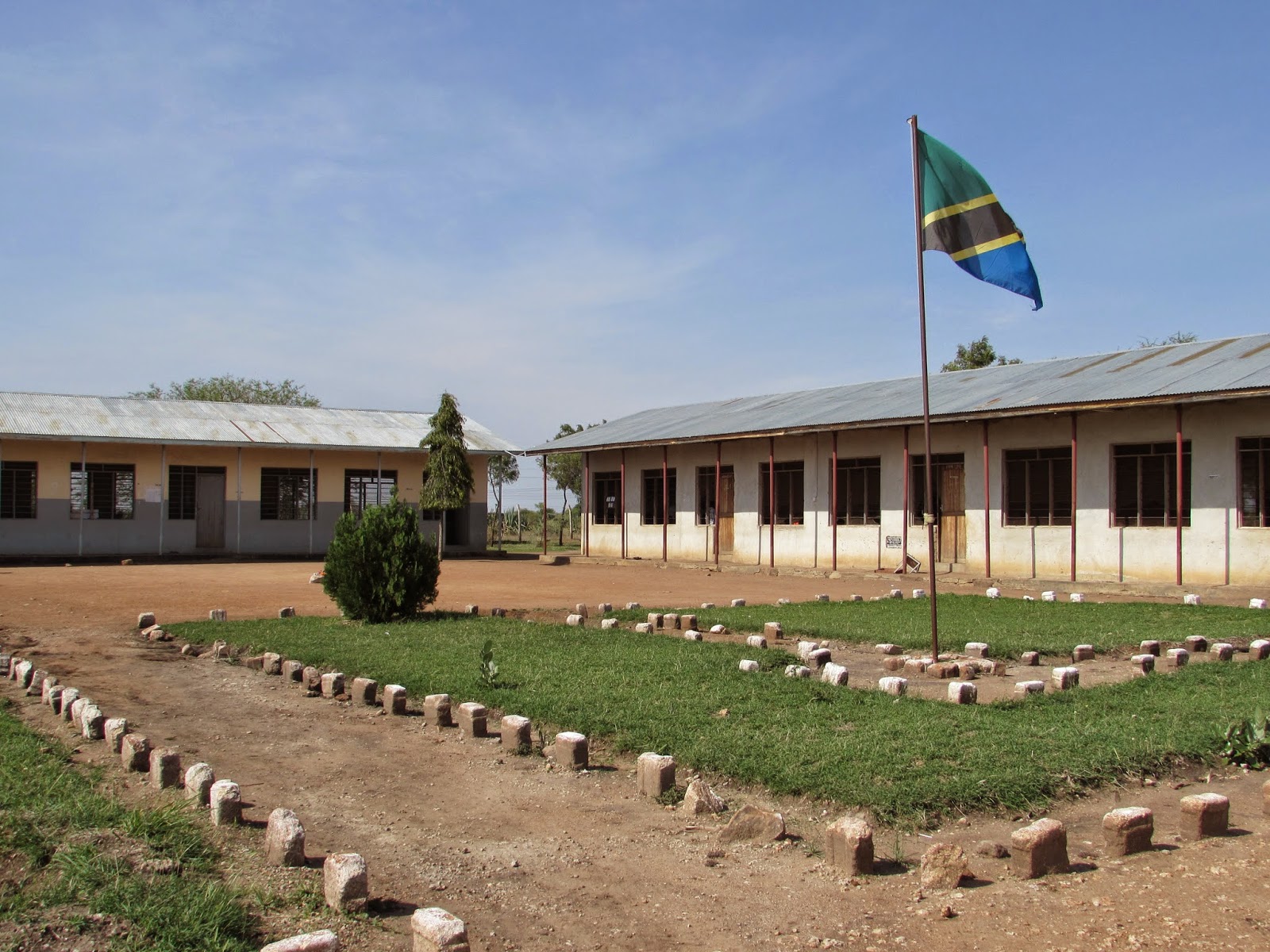
This week’s big event was the final year graduation ceremony at Bishop Nkola secondary school – the school set up and run by AICT in Shinyanga. The school was established in 2009 with one student and has grown to over 200 this year. In line with AICT’s development philosophies, the school focuses particularly on educating girls from poorer backgrounds who are often more likely to miss out on education. 
 
There are 8 classrooms, each with a blackboard and desks but no windows. The school plans on increasing numbers over the next few years and is currently involved in building further dorms and a kitchen.

Graduation was a 5 hour affair with plenty of speeches, lots of singing and dancing and even some comedy. It turned out that it was also being used to welcome us so from our esteemed seats at the ‘top table’ we had to chip in with a couple of off-the-cuff speeches but no dancing, thankfully!