Thursday, 19 May 2016

Time to Say Goodbye

We have come to the end of our time in Tanzania. Despite knowing it’s been coming – booking flights, selling everything in our house, finishing up projects, saying goodbyes - it has still somehow come as a bit of a shock.

It has been and maybe always will be impossible to summarise our time in Tanzania. It’s been an incredible privilege and a fantastic adventure. Shinyanga became home, to the point that daily life there became normal...paying bills, going to work, shopping at the market, eating a ‘delicious’ chip and egg omelette.

As always, its people we’ll miss most. We made great friends in Shinyanga and needless to say the goodbyes have been emotional. Paul’s work hosted a goat BBQ for us complete with dancing, speeches and a classic Tanzanian photo shoot. Lilliane and our ASMK friends had us over for dinner and singing. Then there was ‘Shy-stock’, a day of games and sun and tears. Huge thanks again to Opita, Moses, Liliane, Makwaia, Sabine, Koen and Jacqueline, Liam and Margaret, Nida, Tyler, Myles, Lucy and co. You guys made Shinyanga home.

We’ve had our ups and downs but generally we’re proud of what we’ve been involved in and achieved. Buhangija is a very different place now and we know there are people who will continue working there. The Water Project is progressing well and most of the construction is finished. In exciting news, Paul has been asked to remain on the project team and so will stay involved from Ireland (thanks, Skype).

We have constantly been struck by what an amazing and beautiful country Tanzania is. Its mines full of gold and diamonds, parks full of wildlife, lakes full of water and villages full of friendly, welcoming people. Tanzania is a great place to holiday and explore a tiny part of this vast continent, in short, go and visit! Take pictures, have fun, talk to people and go home different.


Thanks to all of you who read this blog, and sorry it has ended so abruptly – it’s been a busy few weeks! We’ll probably still post things as we remember them or feel the need to share, but as we have only a few more days in Africa, it probably is time to say goodbye. 

Monday, 11 April 2016

Digging for Diamonds

Contractors have been appointed. Contracts have been signed. Construction work is Maganzo has begun. 

As most things do in Tanzania, organising everything to get started on site took a while but pipes are finally being laid. 

There has been a lot of community interest in the project. There are many women who have told us having access to water will be life changing. The arrival of 10km of pipes on trucks also caused quite a stir in a quiet town. And then there are those who are very interested in the soil we dig out to make the trenches. Maganzo is only 6km from Mwadui diamond mine so every day there are quite a number of guys with sieves 'panning for diamonds'...no finds yet as far as we're aware! 

As with all construction project, there are plenty of problems and frustrations but it's exciting to finally see progress. 


Monday, 7 March 2016

Vocational Training

As always, life in Buhangija moves along and its own pace and in its own way. So many things have been accomplished but there is always more to do – it’s just that sort of place.

Before Christmas, donations from Swords came through to send 40 children from the Buhangija Nursery School to proper, real Primary School just outside the compound. This really was a huge accomplishment and credit must go to the nursery teachers for working so diligently to prepare everyone for their big move.

When we had bought all the books and uniforms, paid the school fees and sorted the other bits and pieces needed, we had some funds left over. While chatting to Claire and Sarah one evening, we discovered that they had organised for some of the older ‘residents’ to attend a local Vocational College to learn a trade or skill. This is very exciting as it hopefully provide these teenagers with a means of income after they leave the centre. A lot of people with albinism end up begging on the streets of Dar es Salaam or Mwanza.


Apparently, 15 had signed up to be enrolled on a course but to date there was only enough money for 9. After a few quick calculations, we worked out that the funds remaining from the Primary School fees would cover the additional 6 so thanks to the donations from Ireland, all those who expressed interest will be able to attend college!


Swahili word of the day: Fundi (Technician, used for any trade person…and hopefully there’ll be a few more albino fundis in the future!)

Thursday, 25 February 2016

Gombe Stream National Park

Despite how it may seem, we are not being sponsored by the Tanzanian Tourist Board…although we are open to payment! 

As proud products of the marvellous and free (yes, Mr. Trump, free) Irish education system, we boast that Newgrange is older than the Pyramids, the Giants Causeway the geometrical genius of an irate giant, our saints and scholars rival any others and that, on a good day, there is no land like Ireland.

However, Tanzania is proving to be quite the competition. Not in an emerald isle, cliffs and waves way…more in a giraffe and elephant, colossal mountains, picturesque beaches, gold and tanzanite way. Home of Serengeti, Kilimanjaro, Ngorongoro, Zanzibar as well as numerous East African peace talks, mines full of treasures and the largest volume of freshwater lakes in the world. In short, everyone should come on holiday here.

Gombe Stream National Park is Tanzania’s smallest National Park, situated on the banks of Lake Tanganyika in the west and only accessible by boat. This is where, 55 years ago, a young Jane Goodall went, accompanied by her mother, to study the behaviour of chimpanzees. Goodall’s studies in the following years proved to be groundbreaking and are still talked about in scientific circles.

Last week, we took the 10 hour drive to visit the park and its world famous chimps. The Park is still remote, welcoming only around 1000 visitors each year (compared to Serengeti’s 300,000+). It’s hot and humid and requires a long, long hike through steep hills to try to find a community of around 50 chimps.

So we hiked. And then hiked some more.

In school, all Irish essays seemed to revolve around the phrase ‘go tobann’. It has remained a staple of Gaelige leaving cert essays for generations; coming to mean much more than a simple ‘suddenly’. Never has there been a more apt moment than after three hours, we went around a corner and ‘go tobann’, there they were.

My dad is a big monkey fan. He’s been known to go to the zoo for his birthday. Just himself and my mum walking around a cold Dublin zoo in the middle of March. It’s always to the monkey house he wants to go, and I must confess I never got it.

Now I get it.

Watching these human-like animals play and jump and tease and groom, seeing frustrated mothers swatting away annoying young ones and older males surveying the scene from high up in trees, knowing we were probably as remote as we had ever been was quite awe inspiring. 

We sat and watched for an hour, the maximum amount of time you’re allowed to stay in close proximity. The comparison with humans is remarkable. The behaviour, the relationships, the reactions – all so familiar it was almost eerie. We took a lot of pictures, you can click here for the rest of them.


Gombe is less than 20km from Kigoma, the region with the world’s third largest refugee camp. People are pouring across the Burundi border fleeing what the UN has said could be a second ‘Rwandan style genocide’. It's a truly terrible situation.

Tanzania is a country of such contradictions. The country we live in is one of the most beautiful we've ever seen...and yet, its home to so many marginalised, hungry, homeless, helpless. As we come into our last few months here, this has been one of the hardest aspects of life to get our heads around. A friend of mine, after hours of 'solving the world' over a cup of tea, used to always laugh and say ‘Sure, what do I know anyway?!’. I suppose I thought after all this time I might know something, have some understanding of how all these contrasts and complexities can exist.

But so often, you find yourself thinking, what do I know anyway?

Sunday, 21 February 2016

Invitation for Quotations

About two weeks ago, any Guardian (the Tanzanian version) readers will have been treated to a very special advert on Page 3...

After weeks of getting everything finalised, the water project Paul is working on was ready to start looking for a Contractor. To give the best chance of finding the right company, and to adhere to Tanzania's transparency laws, a small fortune was paid for prime location in the country's "most read English language" newspaper. It's a big milestone in the project and if anyone reading this is interested, please address quotes to PO Box 1195, Shinyanga...!


Wednesday, 10 February 2016

Old New House

Last April, when we thought we would be heading to another part of Tanzania, we moved out of our first Shinyanga house. We had paid for a year up front so were delighted when Koen and Jacqueline, a Dutch couple who also work with ICS, moved in and covered the rent. When we came back to Shinyanga in July, we found a house until December but arrived back in January homeless with out stuff stored in two different friends' houses.

So we have spent the past couple of weeks asking around and trying to find a house - not the easiest when every landlord seems to want a year commitment. However, in bad news, Koen and Jacqueline told us last week that they are leaving Shinyanga. They have become good friends and often bare the brunt of our frustrations and venting so we'll miss having them around. It does mean, in a true 'every cloud' scenario, that we can have their house - our house - back again. 

We've been moved back in for a few days and it's a little weird. Most things look the same. Even Alice's homemade wooden Christmas tree is still in the living room. To avoid repeating ourselves, here's our first blog about the house from October 2014...it's nice to be home!

Friday, 15 January 2016

Happy New Year!

After a busy but great time back in Ireland for Christmas and New Year, we arrived back in Shinyanga on Monday. A month is a long time but it flies by when you're catching up with family and friends, trying to get your head around Christmas shopping and eating as much turkey as possible! Thanks to everyone who made time for us, said hello, fed us and told us they read our blog...

Not particular fans of New Years resolutions, ours should probably be to keep the blog updated more regularly. Being busier here is great but it does mean less time to sit and type our general musings but we'll try.

As always, it will take us a few days to settle in and get used to being back...although things like haggling with airport taxi drivers is far more normal now than it used to be. Paul has a busy few weeks ahead as ICS go through the Tanzanian tender process to find a contractor capable of installing the water supply infrastructure. Alice will continue to work in Buhangija and has already been chatting to ASMK (the local NGO we partner with) about some potential future projects.

If you have any (inevitable) unwanted Christmas presents or are in the middle of the (also inevitable) January clear-out and would like to support work in the Shinyanga Centre for Children with Albinism, Swords Baptist Church are hosting another fundraiser later this month. The money they raised last year fixed the well, restored a rain water harvesting tank, renovated classrooms, installed a clinic and has paid for our nurse, Mama Felicita for the past 8 months...looking forward to seeing what this year will bring!


Wednesday, 16 December 2015

Buhangija Nursery School: An Update

It’s been nearly a year since we first visited Buhangija, experienced the unmistakable odour of suncream mixed with dirt, met Claire and thought that maybe there might be something we could do. We still get emails and comments about our first ‘Buhangija NurserySchool’ posting and thought, after all these months an update might be in order because there have been some changes…

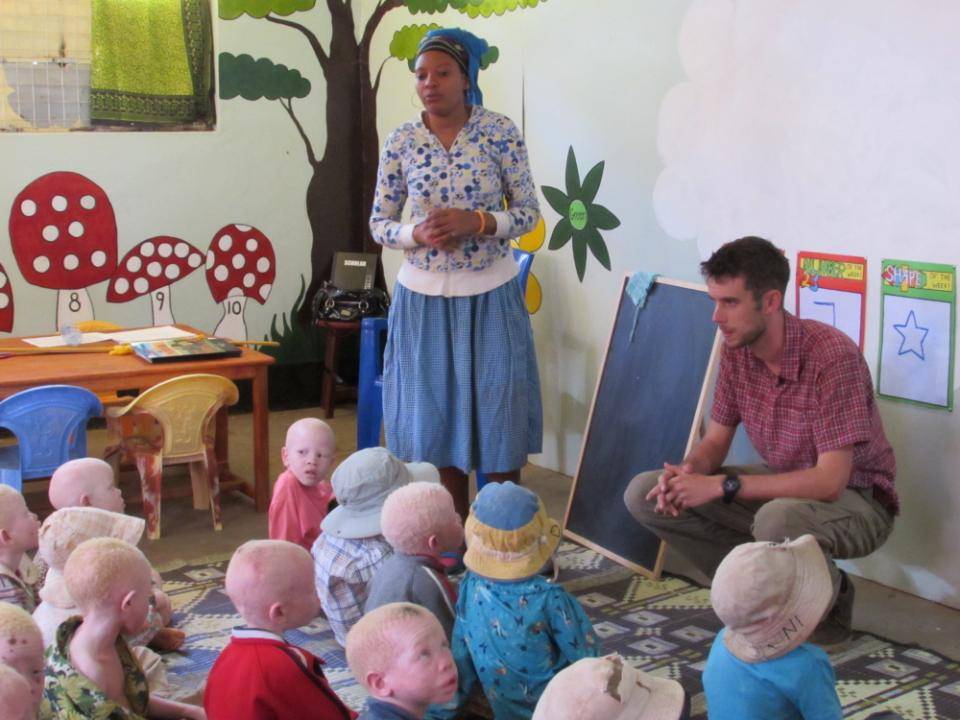
The initial objective of simply keeping the younger children occupied and out of the sun for a few hours each day has developed into a full nursery school with 2 classrooms, teaching nearly 100 children every day. The students receive a snack, wash their hands with soap, sing songs, learn the alphabet, create art, learn science, play with lego and practise reading and writing. Now, from Monday to Friday the compound is typically filled with children singing renditions of ‘Elephant, Elephant’ or ‘Shaky Shaky the Mango Tree’ – two of the students, and we suspect teachers, favourite songs.

Last week, Alice was standing peering into the 2 classrooms watching the teachers telling stories to 50 tiny white heads. The students were sitting with their legs crossed, arms wrapped around their chests, listening intently. The love Janeth and Deborah show to the children is inspiring. They have been hit, spat on, shouted at and more and yet they continue to patiently correct, lovingly discipline with a cheerfulness that can’t always be easy to find!

The teachers bring in extra food for their classes. They clean up every mess that is made. A few weeks ago, they even organised for a group of the older children to go to a local church on a Sunday morning. They sang a song, talked about the school, and most importantly of all were made to feel a little bit like a ‘normal’ child. Deborah and Janeth really are two very special and committed women.

In very exciting news, we have our first class of 31 students graduating from our small school in January. These students will now be proudly walking the short distance to the local Primary School where they will enter Standard 1 – an accomplishment that seemed near impossible during some of the early days of chaos. It’s remarkable progress within a year and something that we are just delighted to be part of.

Swahili word of the day: Tunakwende shuleni (We are going to school)


Wednesday, 25 November 2015

Water Work

Paul has continued to be busy in work over the past few months. As well as specifying and overseeing a bit of survey work; the project budget has been re-worked, Monitoring and Evaluation documents compiled as well as meeting with local stakeholders. Getting the survey sorted was an interesting experience. In a country where you haggle and bargain over the price of a handful of tomatoes, it was no real surprise to spend many hours talking, arguing and pleading over costs. After finally coming to an agreement, we also decided one of the ‘Water Team’ should be with the surveyors at all times to keep an eye of them. Thankfully we had a work experience student with us who was an ideal candidate for that!

The villages of Maganzo and Masagala are located about half an hour drive north of Shinyanga, beside the main Shinyanga-Mwanza road. The communities are very close to Mwadui diamond mine and they do a lot of ‘local’ mining so you have to watch out for large holes when you walk and drive around the area. The target population of approximately 12,000 currently have no access to a reliable, clean water source. People can buy unclean water from small dams or shallow wells nearby but for drinking water, they go to a dam 6km away. There is no other water infrastructure of any sort in the area despite the houses, guesthouses, shops etc. – all water is collected in buckets and walked or cycled to where they are.

ICS is working closely with KASHWASA (Kahama Shinyanga Water Supply and Sewage Authority) who are responsible for taking water from Lake Victoria before treating and pumping to Shinyanga. The project will be taking water from their pipeline and supplying it to 25 public water points. KASHWASA are keen to see the project succeed and have provided technical assistance at various stages, sent Engineers to help with the design and given us over 3km of pipe to use wherever we need. This local participation is useful for ICS now but will also help the project’s sustainability due to the support of those who provide the water and maintain the system.

The project is currently in the detailed design phase so there has been lots of studying of the Tanzania Water Supply Design Manual and discussions about pipe materials, population figures, how many people will actually use our new taps and the like. For the past few months, we have been concentrating on office work because of the Election. Not as a result of any safety concerns, but because very few people believe that we are serious about providing them with a water supply system – they have been convinced we are politicians making empty promises. So the general plan has been to wait until the elections are over and then go back and tell the community we are still here - quite a simple plan really!

Swahili word of the day: Maji safi na salama (Safe and clean water)

Thursday, 5 November 2015

Hapa Kazi Tu!

After weeks and even months of political conversation and debate throughout the country, the Tanzanian General Election took place on Sunday 25th October. 

CCM (Chama Cha Mapinduzi) or Party of the Revolution has, using various names, ruled Tanzania since it's independence in 1961. The party was started by Julius Nyerere, the 'father of the nation', who is revered throughout Tanzania and looks down on you from the wall of every office, shop and public building. CCM were the only legal political party until 1995 - although the addition of more parties has not changed the result of any election, with many claiming that the country knows who the new President will be before any votes are cast. 

This time, the major opposition parties joined together behind one candidate to try and wrestle power from the all-powerful CCM. It was felt that many people were ready for and wanted change, with the majority of younger voters vocal in their desire for change. 

On Thursday, four days later, the new President was declared as CCM's John Pombe Magufuli (Pombe being the Swahili for 'alcohol' and Magufuli meaning 'padlocks' which is the source of much amusement!). No real surprise but the announcement was accompanied by much grumbling and unhappiness among ordinary Tanzanians. However, police now swarm the streets with orders to break up any group of people greater than three members and with promises that any protest or demonstration will be dealt with harshly. The opposition has sent an open letter to the international community and The Hague but with the Tanzanian constitution stating that once a President is announced, the result cannot be overturned, the overriding feeling is that everyone will just have to wait five years and try again.

Looking forward, here is the BBC's take on what the new President of Tanzania needs to concentrate on over his term. Let's hope he can do a good job!

Swahili word of the day: Hapa Kazi Tu (Only Work Here - CCMs election slogan)

Thursday, 15 October 2015

The Baby Room

The Tanzanian Presidential elections are drawing near. Flags have been flying from cars, travelling around town takes twice as long due to the frequent political rallies, megaphones are everyone’s new favourite method of communication and over 100 new children with albinism have been dropped off in Buhangija.

An interesting development in the election build up this year has been the passing of new legislation restricting criticism of the current government. A desire not have a run in with the Tanzanian authorities has made us cautious to point out what the perceived link between these elections and the increase in abandoned children in Buhangija might be. International press have not had to be so cautious. The Washington Post wrote this article about the current crisis.

The recent surge in numbers in Buhangija has created quite a few challenges. Children arrived quickly over the space of a few weeks with some days bringing 7 or 8 new faces. Stretched bed supply became even more stretched, thin porridge even thinner and in the middle of this chaos were 25 new children under the age of three toddling around completely bewildered. Too small to fend for themselves they went unwashed and sometimes unfed – missing out on food behind the experienced elbows of more savvy children. Abandoned and ignored in a place for the already vulnerable.

Thanks to donations and generous support, a new room has been renovated to make a safe and happy space for these 25 children during the day. Here they have their own toys to play with. They get morning porridge, a snack and lunch. Hands are washed, medicine given, stories read, the most beautiful scribbles drawn. A huge thank you must be given at this stage to Sarah, a friend of ours who lives in our town who works tirelessly in this room training two of the older girls in Buhangija to care for these small ones. Genni and Anna are understandably reluctant at times to sit on the floor and make endless block towers, but we’re getting there. Every day is a challenge as we try to encourage and equip these (sometimes stroppy!) teenagers to care for the smallest ones in their care. For some more photos, click here.

Swahili word of the day: Mtoto Vizuri (good child)

Friday, 2 October 2015

Happy Anniversary

We’ve been in Tanzania for a year. It’s hard to believe and yet it seems like a very long time since we said goodbye to our families at Dublin airport 12 months ago. While we never can claim being ‘from’ Tanzania, it has certainly begun to feel like home. Complaints and annoyances are frequent, but we’re still loving every minute.

Just like at home, every week has its ups and downs, frustrations and delights. Tanzania is one of the most materially poor countries in the world and we can’t escape that. At the moment, driving from Shinyanga to Mwanza, all of the rivers and most of the roadside dams are dry as we all wait expectantly for the impending rainy season. It’s also a country plagued by corruption at every level. That poses its own problems and has been the source of some of our most aggravating moments but you get used to that too.

The home of Serengeti, Kilimanjaro, Zanzibar and Lake Victoria, Tanzania is one of the most beautiful countries in East Africa. Combine this with Tanzania’s famous hospitality and friendly culture and it’s not hard to love living here. People are always willing to help, the language barrier regularly proving to be no barrier at all. We are fortunate to have met some great people in Shinyanga and it has become our new ‘home town’

Every day brings more lessons and we are constantly learning new things. The importance of boiling eggs on a Friday night to eat during the Saturday ‘black-out’, how to sweet talk a policeman and call their bluff now and again, that you can sweat from places you never thought possible, to make the most out of a beer when it’s cold and that no matter how much you plead Villareal v Viktoria Plzen watched by one old man takes precedence over the rugby world cup.

A lot of the time, life here feels very normal. We have a house, go to work, pay bills, go shopping. Then there are the times when you have to pinch yourself and realise that we’re still far from home!

Swahili word of the day: Mwaka Moja (one year)

Monday, 21 September 2015

Anna's Here!

Last Friday we collected a post-Indonesia, very bronzed, jet lagged but happy Anna from the airport in Mwanza. She is here to experience Africa, help out in Buhangija, do some travelling and judging by this week so far, sit and drink tea with Alice.

As we've said before, we're very lucky to have had so many visitors. Anna will be here for 3 months which is great. We tried to ease her into life here slowly with swimming pools, nice food and a boat trip in Mwanza but since coming to Shinyanga she has visited Buhangija, decided Ugali isn't nice, sat in the dark waiting for electricity to come back and had days with no water!

Despite being on a break from work, we think we've managed to convince her to make use of her OT skills with the kids in the centre. In return we've promised the standard Serengeti trip and maybe a visit to the Gombe chimps - an experience potentially less intense than being jumped on by 50 albino children!

Monday, 7 September 2015

Thrive-ing in Geita

After a busy few weeks full of moving house, visitors and holidays, life is slowly returning to normal for us in Shinyanga. Paul has been busy in work and Alice has been back in Buhangija – and caught a bit of the ‘Buhangija cold’ that strikes when your immune system is hijacked by 400 sick children who want to be as close to you as possible! Alice also managed to fit in a trip to Geita with Whitney, who also happens to be the real reason Ian extended his stay in Tanzania!

Whitney works for Catholic Relief Services (CRS) and is a programme officer based in Mwanza. Part of her work has involved monitoring and evaluating CRS’s ‘Thrive’ – A Positive Parenting Project. Last week Ian, Whitney and Alice set off to a village between Mwanza and Geita (the place we moved to for a week and a half in May!) to visit a community that has been participating in Thrive. The project is centred on teaching parents how to care for their children’s safety, nutrition and developmental needs by CRS trained volunteers.

This particular village has had some struggles mobilising themselves in the past. Lack of community leader support meant they were behind in construction of a centre to meet together. Undeterred, the women in the village met under a tree. Further inspired by the project’s nutritional teaching, they contribute a small amount of food each and cook communally so their children can eat while they gather to learn. Since then, a simple centre has been built for the local community to meet together.

We arrived to help with one of the final aspects of the project – the murals. In a country with low literacy rates, a picture is often the best way to convey a message. So an enjoyable day was spent in the sun promoting healthy childhood development, early stimulation, proper nutrition and health monitoring...pretty heavy topics considering the giant giraffe and caterpillar we ended up with! Click here for more photos.

Swahili word of the Day: Afya ya Mtoto ni Pamojana… (A healthy child needs…)


Monday, 17 August 2015

Let's go 50-50

So another set of visitors have been and gone. We said goodbye to Clare and Stu last Sunday after an action packed two weeks that included a couple of days in Dar es Salaam, a visit to Victoria Falls in Zambia (photos here), a week in Shinyanga and a whistle stop tour of Serengeti. Indian food was eaten, lions spotted, sunsets enjoyed (a first for Stu apparently), matching shirts bought and worn, rafting survived (soundtracked by this) and quite a few ‘Balimi tatu’ ordered.

The realities of having a ‘real job’ kicked in for Paul as he missed most of the daytime activities in Shinyanga which mainly consisted of chips mayai, enjoying / surviving the heat as well as visit to Buhangija and a local secondary school. It was great to be able to show the changes at Buhangija to a few of those involved in the fundraising that allowed it to happen. The fact that Clare thought it was ‘completely different and better’ than at Christmas was a welcome endorsement of the progress that has been achieved there.
 
It’s always amazing to have visitors over. It’s great to have friends and family who have seen where we live and experienced a bit of what our lives are like here. Ian is still knocking around, making the most of his generous army holidays, so we’re down to ‘Balimi mbili’ but Paul's not having to resort to ‘moja’ just yet!

Swahili word of the day: Moja, Mbili, Tatu (one, two three)

Wednesday, 22 July 2015

Settling In

Our first weeks back in Shinyanga have had their highs and lows. On the up side the weather is great, watermelon season is in full flow and we might have found a place to buy fresh pork but unfortunately the one hotel in town serving Indian food has put up it's prices, it's also papaya season and sometimes it's just too hot.

Paul has now been in his new job for two weeks, the main highlight being the two meals a day provided in the office! So far, it's been busier than expected but a lot of that is trying to set up systems and digitise data to help down the line. There's been a couple of late evenings but hopefully that won't become the norm.

ICS Shinyanga is an office of around 15 people, all of whom are very welcoming and friendly. They've helped us with transport, moving house and even done the dreaded Immigration Office visits on our behalf. ICS are primarily involved in agricultural and child protection projects. The project Paul is involved in is the first major one with water but it's an area they hope to expand - if this goes well!

Being back in Shinyanga has meant that Alice will able to visit and get involved back at Buhangija. We went together for the first time last week and were amazed at the continued general health and cleanliness of the children. We really hoped that things would continue to improve when we were away and it seems that they have. The nurse we helped employ is still there every day and is doing a great job of taking care of the health and hygiene of the kids and their environment.

In other news, we're very excited about Ian, Clare and Stu coming to visit us this weekend. Clare and Stu will be here for two weeks, Ian somehow managed to persuade the army to give him five weeks (Irish taxpayers take note!). It's Clare and Ian's second time here so we really think the Tanzanian tourist board should start paying us. We've planned a trip to Zambia to visit Victoria Falls and will spend a week in Shinyanga to show them what life is really like!

Swahili word of the day: Mhandisi Maji (Water Engineer)


Tuesday, 7 July 2015

Shinyanga 2: Shinyanga Harder

After three and a half great weeks in Ireland, we are now back in Tanzania. Having had our fill of pork, cheese, fresh milk and being cold we are back in the land of rice, beans and UHT. It was wonderful to see people and we were very glad we decided to come back for an extra week and a half. Thanks again to Swords and Dublin West for asking us to share some of what we’re up to.

This post has the making of a monumental catch up but in short, the couple of weeks before we left for Ireland proved to be complicated in a uniquely Tanzanian way. On our emotional last Sunday in Shinyanga, we piled a Hilux high with our stuff, strapped a mattress to the roof and took off for Geita, our ‘new town’ (see previous blog post). Fifteen minutes into our four hour trip, Paul got an email asking him to attend an interview in Mwanza (two hour car journey plus ferry ride from Geita) the next day for a job based in Shinyanga.

A slight change of plan meant that we dropped our belongings in Geita, and continued on to Mwanza. A further email received that night indicated that the interview had been postponed until Thursday. Continuing to rack up the miles, we travelled back to Geita on Tuesday morning to meet people, find out about their projects and familiarise ourselves with a new place – all the while knowing if the interview went well, this could be our one and only week there. In a major stroke of luck, we met Annette, a lovely German woman, who happened to be going to Mwanza the day before Paul’s interview. So on Wednesday morning, Paul arrived in Mwanza airport and after a very pleasant but challenging interview, Paul was offered the job! In most ways, accepting it was a no brainer – it’s a great project, will be good experience and allows us to return to our Tanzaniain ‘home town’.

All was going well until Paul’s lift back to Geita was delayed by a day due to some car issues. That would have been fine had he not taken both passports with him and immigration had not knocked on Alice’s hotel door in Geita at 10pm. After much negotiation, threats of jail, explanation and a conveniently sent whatsapp picture of Alice’s visa, sleep was had. Until 1am when Alice woke up and vomited til the early morning...the joys of life here...!

In summary, Paul has a new job. It’s with a Dutch NGO called ICS who’s main country office is in Shinyanga, very close to where we used to live. He has been employed to help manage a UK Aid funded pre-paid water project in villages in the Shinyanga region. It will aim to share Shinyanga town’s water supply from Lake Victoria with villages along the route which don’t yet have any mains water. Using existing mobile money technology, users will be able to ‘top-up’ cards for the amount of water they want. It’s a bit like this.

Leaving Tearfund ‘officially’ was a tough decision but a great chat with Shannon in the Tearfund country office freed us of any guilt which were are very thankful for! Returning to Shinyanga also allows Alice to continue working in Buhangija where she will be able to continue helping with the nursery school, working alongside the nurse, monitoring the food and water situation and hopefully starting some new projects. On top of all that, we received an email this week asking Alice to manage a hotel in Shinyanga for a month...Tanzania, how we have missed you!

Monday, 15 June 2015

Home Again

So we're back in Ireland for just over three weeks as some of you might have noticed. We timed it to be here for Ian and Rachel's wedding next week (looking forward to it!) but also a good chance to take a break and see family and friends. 

However, we're just too busy visiting McDonald's, drinking milk, eating Irish breakfasts and complaining about how cold it is to write a full post...

Swahili word of the day: Nyumba (home)

Friday, 29 May 2015

Would you eat your own Poo?

Squatting in front of a classroom, demonstrating what consuming your own faeces might look like, it's hard to know if you're at a high or low point in your career – probably a bit of both.

While the nursery school and clinic have been progressing, Paul has been busy with a couple more water projects. With the well finished and providing plenty of water on a daily basis, we decided to tackle a couple of other issues that would help keep the water flowing at Buhangija.

The centre has two large rainwater harvesting tanks but, like the well, they’re broken. One has a cracked, damaged roof and the other has no cover at all. The roofs and gutters feeding the tanks are dirty and damaged. The open tank is full of green, stagnant, rubbish filled water – completely unfit to be used for cleaning, let alone drinking. Yet every day, children, particularly the small ones, fill bottles with brown / green water, seemingly oblivious to the fact that water isn’t supposed to be that colour.  Seeing a child wrap a corner of their t-shirt around the neck of their bottle in an attempt to ‘filter out’ the bigger pieces of dirt has become a common sight.
 
So we found some local technicians, went shopping for materials and started the work of fixing the tanks. As well as putting on a nice new roof, we cleaned the existing catchment areas and gutters and added a new stretch of guttering to get as much water as possible. Rainwater harvesting is a good solution to provide water during the dry season in Tanzania. Rainfall levels are quite high during the wet season so being able to collect that means you have a supply of water the whole year round. To see more pictures of the tanks construction, click here.

We have also fixed showers, added hand washing taps and cleaned toilets. However, we realised early on that we could do as much as we wanted with the ‘infrastructure’ but unless it was coupled with some education and training, it may not bring any benefit to the health and well being of the kids. Hence Paul’s attempt to explain to a group of children that not washing your hands with soap is like eating your own poo. Thankfully, they saw the funny side and shouted ‘hapana’ (no) when the key question was put to them. Expounding the health benefits of hygiene doesn’t work, especially where children are concerned, but disgust and some healthy peer pressure has been proven to make an impact. So hopefully watching the ‘mzungu’ pretend to do something so revolting might just stick with them the next time they use the toilet or go to eat food!
 
As the children are prone to forget, we have told the matrons that every child should wash their hand before meals and so, one evening last week, we stood in shock and a hint of pride as we watched 80 children sent to the sinks before receiving food. We’re hoping this will continue.

Swahili word of the day: Kosha Mikono kwa Sabuni (Wash your Hands with Soap – now on signs above sinks and hand washing stations)

Thursday, 21 May 2015

Buhangija Clinic

As we’ve moved into our final few weeks in Shinyanga, we have been hard at work in Buhangija, trying to make best use of the money that’s been donated before we leave. Great strides have been made in the past few weeks in coordinating and unifying the people who have invested their time and money into Buhangija. Meetings have been held with all those involved and this new communication has meant that there has been a renewed, coordinated effort in our work at the centre.

Buhangija is a government run institution, and at times there are many layers of bureaucracy that must be waded through before action can be taken. We have had many difficult discussions with the various people involved, acknowledging that any work we do removes responsibility from the people in charge. Sometimes, sustainability in an environment like Buhangija seems like a distant dream!

As mentioned in a previous post, over the past couple of months we have working alongside ASMK, a Shinyanga based NGO. With their support, we decided to address the daily hygiene and medical issues in Buhangija by establishing a clinic. The children have no access to any form of healthcare and it is usually Claire or ourselves who tend to cuts, blisters and sunburnt skin.

ASMK had secured funding from Dar es Salaam and combined with the generous donations we have received from Ireland, we reckoned we had sufficient money to set up a room and hire a nurse.

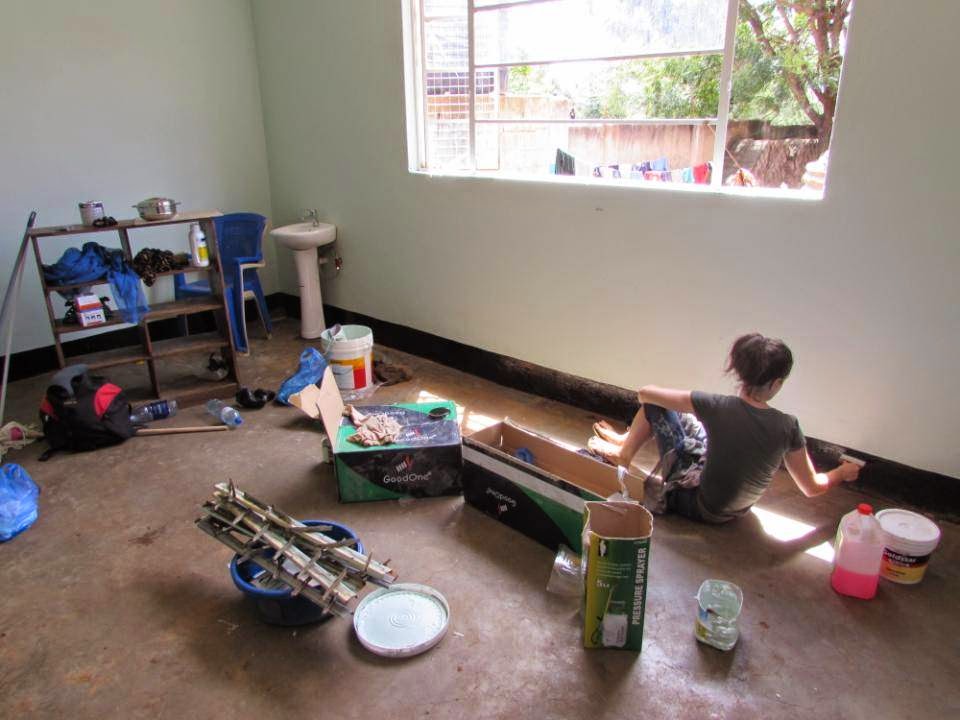
So we dusted off our painting clothes, employed a carpenter, fixed windows, installed a sink, found a bed and now, in a room off the youngest children’s dorm, there is a small, bright, clean clinic. It is here that our newly employed nurse, Madam Felicia, will work five and a half days a week to provide onsite medical care and advice. To see more of the renovation process, click here.

Today was the first day of the Buhangija clinic, Madame Felicia arrived in her new uniform ready for work. After some brief introductions, she was busy cleaning kids, tending wounds and disinfecting cuts. A retired nurse and mother of six, she has approached the job with enthusiasm. Serious medical needs will still be tended by a doctor but now she is in Buhangija, there is someone to actually contact the doctor! In many ways, what the children need is a mother, someone who will love and care for them, rather than a medical professional. We are thankful that in Mama Felicia we have found someone who ticks both boxes.
 
The children of Buhangija still need more to be done to increase their quality of life to a basic level but we're hoping this is part of a good start.

Swahili word of the day: Dawa (medicine – a favourite of the queue of kids outside the clinic door!)